Sovereignty
The Dependency Crisis: A Clear and Present Danger
Most nations including India face an unprecedented digital dependency crisis: we rely on the USA for software and social media, and China for hardware. While China cannot stop our phones overnight, the USA can order its companies to act and they will comply.
The Weaponization of AI: Data and AI can be weaponized against nations. Just as India is achieving Aatmanirbharta (Independence) in defense, we must achieve technological sovereignty in AI and digital infrastructure. The stakes are existential.
The Personal Data Nightmare
The Business Model of Surveillance
Google & Meta Revenue Sources:
- 80%+ of revenue comes from packaging and selling user data
- Google scanned emails until 2017 to show targeted ads
- Facebook (Meta) has a documented history of scandals and privacy violations
The Trust Question: Should we trust companies whose entire business model depends on earning by selling our personal information?
The Human Factor
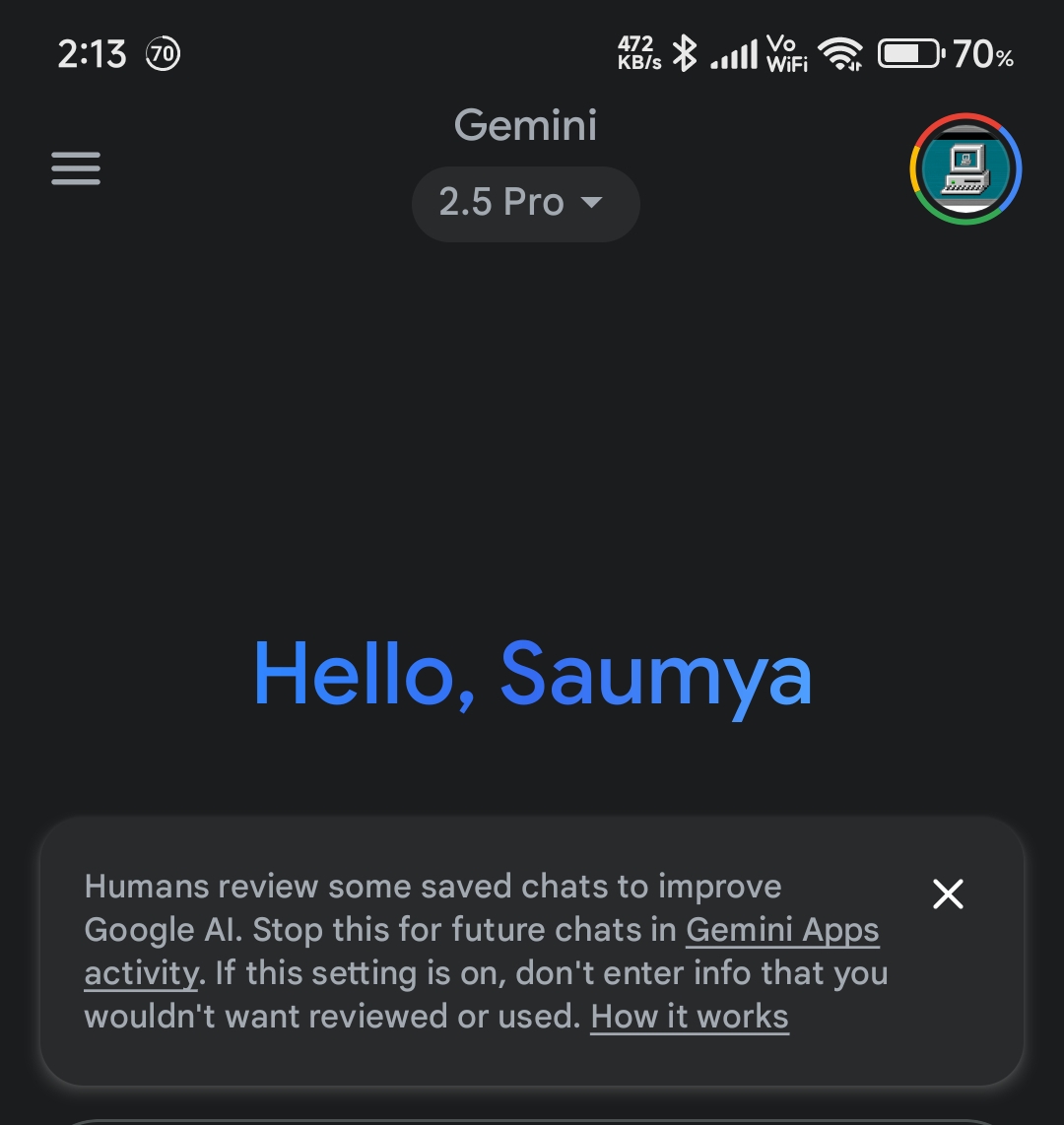
Recent revelations show humans reviewing private conversations in Gemini. When your most sensitive communications are read by strangers, privacy becomes an illusion.
Historical Precedents: When Dependencies Bite
The Platform Monopoly
Current Reality:
- Computers run Windows (Microsoft)
- Phones use Android (Google) or iOS (Apple)
- Social media & Search algorithms are controlled by US companies
- They decide what content populations see, when, and how
The Huawei Lesson:
Why did China develop HarmonyOS, it's own phone OS? Because Google banned Huawei from using Play Store overnight. One company decision crippled a major Chinese technology company.
The Backdoor Dilemma
Legal Compliance vs. National Security Orders
The Contradiction: Companies claim to "follow local laws" but what happens when US national security agencies issue conflicting orders? The US has a history of weaponizing everything for regime change.
The Reality: They've already demonstrated this by:
- Breaking copyright laws citing "national security"
- Ignoring international regulations when convenient
- Cooperating with surveillance programs despite public denials
Political Instability Factor: With increasing geopolitical tensions, the risk of sudden service disruption or data access changes grows exponentially.
US Dependency: The Intelligence-Industry Nexus
ChatGPT: The Trojan Horse in Plain Sight
The Intelligence Connection
ChatGPT's board includes Paul Nakasone, whose background reads like a spy thriller:
- Senior intelligence officer in US Army
- Commander of US Cyber Command
- Director of National Security Agency
- Author supporting Foreign Intelligence Surveillance Act
The Data Harvest
Scale of Exposure:
- Hundreds of millions use ChatGPT daily
- Recent trends like Ghibli made users voluntarily share personal photos
- ChatGPT has emails, phone numbers, comprehensive personal profiles
- The AI knows users better than their closest family members
The Training Trap: Free plans aren't charity - they're data collection. Users' information becomes training data for models competing against a country's AI development.
National Security Implications:
- Our engineers, government agencies, R&D institutions use ChatGPT
- Sensitive technical discussions, strategic planning, intellectual property flow through these systems
- This represents the largest intelligence gathering operation in human history
The US Strategy: AI as a Weapon of Economic Warfare
The China Precedent
When the US saw China as an AI competitor:
- Banned AI chips and GPUs to Chinese companies
- ChatGPT blocked Chinese users and companies
- Created artificial scarcity of AI capabilities
The India Scenario
The Uncomfortable Question: What happens when geopolitical tensions escalate and the US views India as an AI competitor? Could ChatGPT, AWS, Google Cloud, and Microsoft services suddenly become unavailable to Indian users and companies?
Historical Parallel: This isn't hypothetical. The US has used technology access and sanctions as leverage in international disputes before.
The Intelligence-Industry Nexus
Oracle: Leon E. Panetta (former CIA Director, US Secretary of Defence) sits on the board
Amazon (AWS): Keith B. Alexander (former NSA Director) was on the board
Microsoft: Mike Howard (22 years CIA veteran) served as Chief Security Officer for 16 years
The PRISM Program:
Microsoft participated in PRISM, giving the NSA access to:
- Hotmail/Outlook emails
- Skype calls and messages
- Cloud storage contents
- Internet communications
The Tip of the Iceberg:
We only know about surveillance programs that were leaked. The scale of unknown intelligence gathering is likely orders of magnitude larger.
The ServaLabs Solution: Sovereignty by Design
Bring AI to the data, not data to AI. Unlike cloud-based solutions that require sending sensitive data to external servers, our AI runs on your private servers. This means: zero data sovereignty risk, no vendor lock‑in, full control over behaviour and training, compliance with strict regulations.
The Urgent Call to Action
The Cost of Inaction
The question isn't whether India can afford to build sovereign AI infrastructure - it's whether we can afford not to.
The Exponential Risk: As AI devices like smart glasses with cameras become mainstream, the surveillance potential becomes total. Without sovereign AI infrastructure, every aspect of a citizen's life could be monitored, analysed, and influenced by foreign powers.
The Window is Closing: Every day we delay, the dependency deepens. Every engineer using ChatGPT, every company using AWS, every citizen using Google services makes the transition harder.
The answer will determine whether we remain a sovereign nation or in a digital colony.